Pixel Art Style
May 16, 2023 at 12:00:00 AM

Description
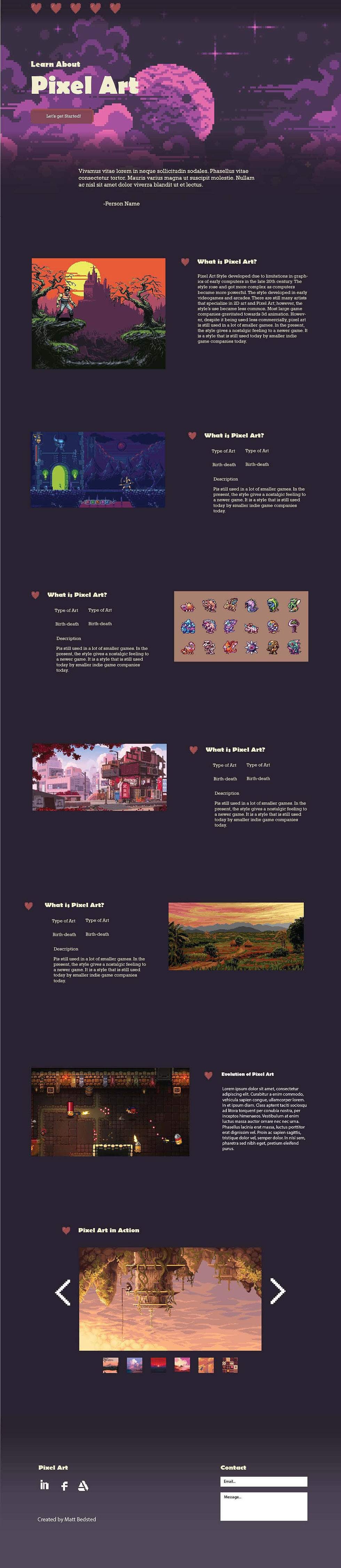
For this project, I designed a microsite inspired by a specific art and design style that I’ve always been fond of: pixel art. Pixel art holds a special place in my heart due to its nostalgic charm, vibrant colors, and the unique aesthetic it provides. It evokes memories of classic video games and early computer graphics, and I wanted to capture that spirit in a modern web design context. The aim was to design a website that felt like a small indie company site, giving it a handmade, quirky feel. I wanted it to have the same playful, nostalgic energy that pixel art does, while also feeling fresh and dynamic for a contemporary audience.


.jpg)
Before diving into development, I spent time researching classic pixel art games and indie websites to understand the key elements that define the style. I analyzed color palettes, grid-based layouts, and UI patterns that contribute to the retro aesthetic. This research helped me refine my vision for the project and ensured that every design decision—from the choice of typography to the placement of interactive elements—felt intentional and authentic. I wanted the microsite to feel like an extension of a pixel art world, where every detail contributed to an immersive experience.
Video
Before diving into development, I spent time researching classic pixel art games and indie websites to understand the key elements that define the style. I analyzed color palettes, grid-based layouts, and UI patterns that contribute to the retro aesthetic. This research helped me refine my vision for the project and ensured that every design decision—from the choice of typography to the placement of interactive elements—felt intentional and authentic. I wanted the microsite to feel like an extension of a pixel art world, where every detail contributed to an immersive experience.
Process
The design process began by selecting the pixel art aesthetic as the central theme. I knew this would guide not only the visual elements but also the overall tone of the site. I began by creating pixel art assets—icons, buttons, and character illustrations—that would populate the microsite. Since pixel art is often associated with digital minimalism, I focused on creating simple but effective visual elements that would provide maximum impact with minimum detail.


To further bring the design to life, I used JavaScript and jQuery to create interactive elements and animations. I wanted the website to feel engaging, so I added hover effects and dynamic content changes that responded to user actions. For example, when users hover over certain buttons or links, the pixelated elements would animate slightly, reinforcing the playful nature of the site. The animations added a layer of fun and interactivity, making the website more than just a static collection of images.
One of the challenges was balancing the nostalgia of pixel art with modern web standards. While pixel art can evoke a sense of playfulness and fun, it also requires careful attention to detail, especially when it comes to responsiveness and usability. I used responsive design techniques to ensure that the site would look great on any device, adjusting pixel art elements to maintain their integrity across screen sizes. The goal was to preserve the charm of the design without compromising the user experience.

Wireframes
The design process began by selecting the pixel art aesthetic as the central theme. I knew this would guide not only the visual elements but also the overall tone of the site. I began by creating pixel art assets—icons, buttons, and character illustrations—that would populate the microsite. Since pixel art is often associated with digital minimalism, I focused on creating simple but effective visual elements that would provide maximum impact with minimum detail.
Reflection
Looking back at the Pixel Art Website project, I’m extremely proud of how it turned out. This was a great opportunity for me to experiment with web development techniques and learn how to merge design and interactivity in a cohesive way. The project allowed me to play with pixel art in a modern context, and I thoroughly enjoyed every step of the process. One of the aspects I’m particularly proud of is the interactive elements. Using JavaScript and jQuery to add subtle animations and hover effects was a lot of fun, and it gave the site a unique character. It was rewarding to see how something as simple as a pixelated icon could become animated and interactive, breathing life into the page.
